

Teach You a Lesson is the 2026 Netflix K-drama that turned a Korean school crisis into the most-watched non-English series in the world. All 10 episodes dropped on Netflix worldwide on June 5, 2026, and the show stayed at No. 1 on Netflix’s global non-English chart for four straight weeks. It is streaming on Netflix in the US right now, with English subtitles.
The premise is simple and extreme. After school violence and collapsing teacher authority push the Korean school system to a breaking point, the government creates the Educational Rights Protection Bureau (ERPB). Its inspectors can use physical force and unconventional methods to discipline violent students, abusive parents, and corrupt school officials. The show is fiction, and it knows it. But almost everything it shows comes from real debates in Korean schools.
This guide covers what the show is, who the main characters are, whether it has a twist, which episodes matter most, what the cast did before this, what the subtitles miss, how Korea reacted, and what is real about the Korean school system behind the drama. There are no major spoilers here. Episode descriptions cover the setup only, not the ending.
Contents
- What is Teach You a Lesson about?
- Who are the main characters?
- Does it have a twist?
- Which episodes matter most?
- What did the cast and director do before this?
- What do the subtitles miss?
- How did Korea react?
- What is real about the Korean school system in the show?
- Where can I watch it in the US?
- For Spanish-speaking readers
- Frequently asked questions
- Your 3 next steps
What is Teach You a Lesson about?
Teach You a Lesson (Korean title: 참교육, pronounced chamgyoyuk, literally “true education”) is a 2026 South Korean action school drama. It was directed by Hong Jong-chan and written by Lee Nam-kyu, Kim Da-hee, and Moon Jong-ho. It is based on the Naver webtoon Get Schooled by Chae Yong-taek and Han Ga-ram. The series runs 10 episodes, and Netflix released all of them at once on June 5, 2026.
The story starts with a death. In 2024, a passionate young teacher named Choi Ga-yoon is killed by her student Cho Gyu-cheol. Her father, Choi Kang-seok, is the Minister of Education. He creates the Educational Rights Protection Bureau (ERPB) in her memory and hires Na Hwa-jin, a former Special Forces captain and his son-in-law, as its lead inspector. Hwa-jin travels from school to school, taking on bullying rings, gang-linked students, corrupt teachers, and parents who use money and power to protect their children.
Each episode works like a case file. One school, one problem, one intervention. A high school where a politician’s son bullies a classmate to death. A technical high school where students fight to join a local gang. A girls’ school where a student influencer destroys a teacher with edited video. A foreign language high school where a famous teacher takes bribes from rich parents. An elementary school where a mother harasses a second-year teacher. A middle school where students sell diet drugs. A high school where gambling debts trap students. A top student’s family pushes him toward medical school with illegal pills. The cases are fictional, but every one of them mirrors a real headline in Korea.
The show is rated TV-MA in the US and 19+ in Korea. The violence is sustained and direct. That rating matters for the show’s own argument. Critics in Korea pointed out the irony that teenagers, the people most affected by the problems the show depicts, cannot legally watch it.
Best K-Dramas on Netflix for First-Time Viewers: Start Here
If Teach You a Lesson is your first K-drama, this list shows where to go next, from romance to thriller.
Who are the main characters?
There are four leads, and each one fills a different role in the team.
Na Hwa-jin (Kim Mu-yeol) is the ERPB’s lead inspector. He is a former Special Forces captain who now enforces discipline with his fists. He is intimidating, funny, and grieving. His fiancee Ga-yoon was killed by a student, and that loss drives everything he does. He speaks informally to everyone, including students and senior officials, which is itself a break from Korean hierarchy.
Choi Kang-seok (Lee Sung-min) is the Minister of Education and the founder of the ERPB. He created the bureau after his daughter’s death. He is the political brain of the operation, defending it in public while pushing Hwa-jin in private. Lee Sung-min brings the same gravity he showed as the head of a family conglomerate in Reborn Rich.
Im Han-rim (Jin Ki-joo) is a former Special Forces sergeant who joins the ERPB as an inspector. She enjoys violence, loses her temper loudly, and becomes the show’s comic engine. Her backstory connects to Hwa-jin’s past, and her arc is about learning when force helps and when it does not.
Bong Geun-dae (Pyo Ji-hoon) is a KAIST graduate and a fifth-grade civil servant who works as the bureau’s desk officer. He is the brains of the team, not a field fighter. He hacks accounts, tracks money, and finds the evidence that makes each intervention stick. His role is smaller than the other three, but he is the one who turns a beating into a case.
The supporting cast changes with each school. A politician father, an influencer student, a bribe-taking star teacher, a harassing mother, a loan shark, and a strict mother pushing her son into medical school all appear as episode villains. The show also gives real weight to the victims: bullied students, burned-out teachers, and parents who do not know how to protect their children.
Does it have a twist?
Yes, and it unfolds slowly. The show is not a mystery in the usual sense. Each episode tells you its problem early. The twist is in the backstory: what really happened to Ga-yoon, and what Hwa-jin and Kang-seok are hiding from each other about her death. Flashbacks across the season reframe what you thought you knew in episode 1.
The other twist is tonal. The show looks like a revenge fantasy, and it often plays like one. But it keeps asking whether the bureau’s violence actually fixes anything. A student who is beaten in one episode returns changed in a later one, or does not. A teacher who is saved still has to go back to the same school on Monday. The final episodes push this question hardest, and the ending does not let the bureau off the hook.
You can watch the show for the action alone and enjoy it. But if you pay attention to the backstory, the last two episodes land differently. No spoilers here, but do not skip the flashbacks. They are the real plot.
Which episodes matter most?
All 10 episodes dropped on the same day, so you can binge the season in a weekend. If you are short on time, these five episodes carry the most weight. The table below describes the setup of each episode without revealing the ending.
| Episode | School | The problem |
|---|---|---|
| Episode 1 | Daehan High School | A politician’s son bullies a classmate to death and faces no consequences |
| Episode 3 | Soyeon Girls’ High School | A student influencer accuses a teacher of assault with edited video |
| Episode 5 | Hyeongjung Elementary School | A mother harasses a second-year teacher who refuses to favor her son |
| Episode 6 | Hyeonjin Middle School | Students under 14 sell diet drugs and cannot be punished as adults |
| Episode 8 | Seungyeon High School | A top student is pushed toward medical school with illegal pills |
Episode 1 sets the rules. It introduces Hwa-jin, the bureau, and the show’s central question: what happens when the people who are supposed to protect students cannot or will not act? Episode 3 is the most talked-about episode in Korea, because it shows how a short edited clip can destroy a teacher’s life overnight. Episode 5 is the quietest and, for many viewers, the hardest to watch. A young teacher is worn down not by one big event but by daily harassment from a parent.

Episode 6 deals with a real legal gap. In Korea, offenders under 14 are exempt from criminal punishment, so the students in this episode are released within hours of being caught. The episode asks what a school can do when the law cannot act. Episode 8 is about the pressure to enter medical school. A top student faints during a college early admission test, and the investigation finds a mother who controls his food, sleep, and medication. For viewers who know Korea’s exam culture, this episode needs no explanation.
Episodes 2, 4, 7, 9, and 10 fill out the season. Hierarchy is another Netflix school drama about power in an elite high school, and our Korean-language guide breaks down its characters, relationships, and episodes. Episode 2 visits a technical high school where students fight to join a gang. Episode 4 exposes bribery at a foreign language high school. Episode 7 follows students trapped in online gambling debts. Episodes 9 and 10 bring the backstory to a close. If you want the full picture, watch all 10. If you want a test run, watch episodes 1, 3, and 5 first.

What did the cast and director do before this?
Kim Mu-yeol (Na Hwa-jin) worked with director Hong Jong-chan before, in Netflix’s Juvenile Justice (2022), where he played judge Cha Tae-ju. His best-known films include The Gangster, the Cop, the Devil (2019), Forgotten (2017), and The Roundup: Punishment (2024). He also appeared in Sweet Home seasons 2 and 3. If you liked his mix of menace and warmth here, Juvenile Justice is the closest next watch, and it is also on Netflix.
Lee Sung-min (Choi Kang-seok) played the ruthless conglomerate head Jin Yang-cheol in Reborn Rich (2022), one of the most-watched Korean dramas of that year. He was also in Juvenile Justice as judge Kang Won-jung, alongside Kim Mu-yeol. His authority on screen comes from stillness, not shouting, and the show uses that well.
Jin Ki-joo (Im Han-rim) broke through in the film Little Forest (2018) and the time-travel drama My Perfect Stranger (2023). She also appeared in the 2024 period series Uncle Samsik with Song Kang-ho. Her role here is louder and more physical than her earlier work, and it is the show’s main source of comedy.
Pyo Ji-hoon (Bong Geun-dae), better known as P.O of the K-pop group Block B, is a singer turned actor. He previously appeared in Hotel Del Luna (2019). His character here is the quiet one, and the show gives him the most screen time in the gambling episode, where his hacking skills drive the plot.
Director Hong Jong-chan directed Juvenile Justice (2022) for Netflix, and earlier the acclaimed dramas Dear My Friends, Life, Her Private Life, and Doctor Stranger. Juvenile Justice is the clearest companion piece. Both shows ask what justice looks like when the system fails young people, and both refuse easy answers. If you finish Teach You a Lesson and want more of the same questions with less violence, watch Juvenile Justice next. Our guide to the best K-dramas on Netflix for first-time viewers includes both shows.

What do the subtitles miss?
English subtitles tell you what happens. They do not always tell you how it sounds in Korean. Four things get lost or flattened.
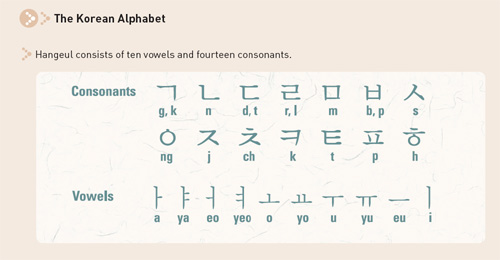
First, the title itself. 참교육 literally means “true education.” But in everyday Korean, 참교육 also means teaching someone a harsh lesson, the kind you do not forget. The English title keeps the second meaning and loses the first. The show’s whole argument lives in that gap: is this true education, or is it just punishment with a good name?
Second, speech levels. Korean has distinct formal and informal registers, called 존댓말 and 반말. Students are expected to use formal speech to teachers. Teachers use informal speech to students. Hwa-jin breaks this pattern on purpose. He speaks informally to everyone, including students, parents, and senior officials. In English subtitles, all of this becomes plain “you” and “I.” The disrespect that shocks Korean viewers is invisible to English viewers. Watch for the moments when a Korean character flinches at how Hwa-jin speaks. The subtitle will not explain why.
Third, the word 교권 (gyogwon). It means teacher authority and teacher rights at the same time. There is no single English word for it. The show’s fictional bureau is called the 교권보호국, the Teacher Rights Protection Bureau. The word carries a whole national debate. In 2023, Korea passed five laws to protect teachers’ rights, after years of headlines about collapsing classroom discipline. When a character says 교권, Korean viewers hear that debate. English viewers hear “teacher authority” and miss the rights half.
Fourth, 눈치 (nunchi), the skill of reading a room and sensing what others expect. Korean school life runs on 눈치. Teachers watch parents, parents watch teachers, students watch both. Many scenes in the show turn on who has 눈치 and who does not. A parent who lacks it makes impossible demands. A student who has it survives. The subtitles cannot carry this word, so they translate the sentence and drop the concept. Our earlier guide to what Netflix subtitles miss in The Glory covers the same problem in another school drama, and our D.P. guide does the same for military culture.
The show also runs on two feelings Korean viewers name easily. 정 is the bond that keeps people tied to each other even in conflict, the reason Hwa-jin cannot walk away from his dead fiancee’s students. 한 is grief that does not resolve, the reason the backstory keeps returning. You do not need these words to follow the plot. But they explain why Korean viewers found the show moving rather than just violent.
How did Korea react?
The show was a hit and a controversy at the same time. In its first week, it topped Netflix Korea’s daily Top 10 within a day. By the following week, it was the most-watched non-English series in the world. It stayed at No. 1 on Netflix’s global non-English chart for four straight weeks, reached No. 1 in 46 countries, and logged 67.2 million views in its first 91 days. That made it the tenth most popular non-English season in Netflix history at the time.
Critics were mostly positive. Rotten Tomatoes records 90% positive reviews from 10 critics, with an average rating of 6.8 out of 10. Korean reviewers praised its emotional weight and realistic depiction of teacher burnout, while noting the ethical unease of its violence. Forbes called it “one of the smartest, best-written, and most addictive feel-good dramas of the year.” The South China Morning Post was critical, calling the premise of government-backed corporal punishment “alarming.”
The controversy started before the show aired. The source webtoon drew criticism in 2023 after a chapter depicted themes of “reverse racism” with racial slurs and stereotypes. The English version of the webtoon was removed from the Webtoon platform. Actor Kim Nam-gil was first considered for the lead role and publicly turned it down because of the source material’s controversy. After the adaptation was announced, the Korean Teachers and Education Workers Union (KTU) called for the series to be canceled, arguing in a statement titled “Violence Is Not True Education” that the show glorifies corporal punishment, which is strictly banned in Korean schools.

At the same time, the Korean Federation of Teachers’ Associations praised the drama for highlighting real problems: declining classroom discipline, violations of teacher authority, and the lack of institutional support. The show’s second-week buzz score in Korea reached 88,089 points, making it the most buzzworthy weekly drama of 2026 at the time. The debate did not stay on screen. Gyeonggi Province Superintendent-elect Ahn Min-seok proposed creating a real-life Teacher Rights Protection Bureau, saying “Education is impossible unless teachers’ authority is restored.” Teachers with special forces backgrounds reportedly messaged him, saying they wanted to serve in it.
Season 2 has not been confirmed. In July 2026, Korean reports said a second season was under discussion. Netflix said on July 21, 2026 that nothing had been decided. As of October 20, 2026, there was still no renewal announcement. Our D.P. guide and The Glory guide cover two other Korean shows that sparked similar national debates.
What is real about the Korean school system in the show?
The bureau is fiction. No ERPB exists in Korea. But almost every problem it handles is real. Here is what the show gets right, and where it invents.
Teacher authority really is in crisis. Korean teachers describe a steady loss of classroom control over the past decade. Malicious parent complaints, known as 악성 민원, are a documented problem. Teachers report being filmed, threatened, and reported for discipline that would once have been routine. The 2023 package of five teacher-protection laws was a direct response. The show’s elementary school episode, where a mother harasses a second-year teacher, is the most literal version of this problem.
Corporal punishment is banned. The KTU’s statement against the show makes this explicit. Physical punishment has been strictly banned in Korean schools. The show’s central fantasy, a government agent who can hit students, is exactly what the law forbids. That is the point. The show asks what people wish the system could do, not what it does.
Homeroom teachers carry an enormous load. In Korea, one homeroom teacher (담임) is responsible for a class’s teaching, counseling, parent contact, and administration. The young teacher in episode 5 is in her second year, and the show depicts her isolation accurately. A new teacher with a difficult parent often has little backup. This matches what Korean teachers describe in surveys and interviews.
Private academies (학원) shape the system. Episode 4 shows a star teacher who is also a famous online lecturer, taking bribes to favor rich students. Hagwon are a real and massive part of Korean education. Families spend heavily on them, and the line between school and hagwon is often blurry. Foreign language high schools, the setting of episode 4, are real and highly competitive schools where admission itself is a prize.
The under-14 rule is real. In Korea, offenders under 14 are exempt from criminal punishment. Episode 6 builds its plot on this gap. The students are caught and released within hours. Whether the law should change is a live debate in Korea, and the show takes a side by dramatizing the frustration.
Medical school pressure is real. Episode 8 shows a mother who controls her son’s food, sleep, and medication to get him into medical school. The college entrance exam (수능) and medical school admission dominate family life for many Korean teenagers. The illegal pills in the episode are fictional in detail, but the pressure behind them is not.
One caution for viewers outside Korea: the show compresses all of this into ten episodes of action. Real Korean schools are not this violent every day. Most teachers never face a gang, a loan shark, or a drug ring. What they do face, daily, is the slow pressure the show exaggerates: parents who demand, students who test limits, and a system that gives teachers responsibility without matching authority. That is the part Korean viewers recognized, and it is why the show became a national conversation rather than just a hit.
If you want more on the military and school culture the subtitles skip, our D.P. guide to Korean military culture covers the world many of these characters come from, and our Netflix vs Viki vs Kocowa guide explains where to stream Korean dramas in the US.
Where can I watch it in the US?
Teach You a Lesson is streaming on Netflix in the US. All 10 episodes are available now, with English subtitles. It is a Netflix original, released worldwide on June 5, 2026, so it is part of the standard Netflix catalog, including the Standard with Ads plan. There is no weekly wait. You can start episode 1 and finish the season in a weekend.
The show is rated TV-MA for graphic violence, strong language, and mature social themes. It is not suitable for children or younger teens. Each episode runs about 52 to 72 minutes, so the full season is roughly 11 hours.
To start watching, open the show on Netflix. If you are choosing between streaming services for K-dramas in general, our Netflix vs Viki vs Kocowa comparison breaks down subtitles, catalogs, and prices for US viewers.
For Spanish-speaking readers
If you prefer to read in Spanish, we have four K-drama guides for you. Our Spanish-language D.P. guide explains the Korean military culture the subtitles skip. Our list of the best K-dramas on Netflix to start with covers four classics for new viewers. If you want romance first, try four romantic K-dramas on Netflix for 2026. And our comparison of Netflix vs Viki vs Kocowa for Spanish subtitles in the US shows where to stream with Spanish subtitles.
Frequently asked questions
Is Teach You a Lesson on Netflix in the US?
Yes. It is a Netflix original released worldwide on June 5, 2026. All 10 episodes stream on Netflix in the US with English subtitles, including on the Standard with Ads plan. For other places to watch K-dramas, see our Netflix vs Viki vs Kocowa guide.
Is Teach You a Lesson based on a true story?
No. It is based on the Naver webtoon Get Schooled (참교육) by Chae Yong-taek and Han Ga-ram. The ERPB is fictional. But the problems it depicts, teacher burnout, parent harassment, school violence, and exam pressure, are real issues in Korean schools. If you like true-story-adjacent Korean drama, start with our best K-dramas for first-time viewers list.
Will there be a season 2?
Not confirmed. Netflix said on July 21, 2026 that nothing had been decided, and as of October 20, 2026 there was still no renewal announcement. Korean reports in July 2026 said a second season was under discussion, but that is not a confirmation.
Why is Teach You a Lesson rated TV-MA?
Netflix rates it TV-MA for graphic violence, strong language, and mature social themes. The violence is sustained and direct, and the show is rated 19+ in Korea. It is not suitable for children or younger teens, even though it is set in schools.
What should I watch after Teach You a Lesson?
Start with Juvenile Justice (2022), also on Netflix, by the same director and starring Kim Mu-yeol and Lee Sung-min. Then try D.P. for Korean military culture and The Glory for school violence from the victim’s side. Our D.P. guide and The Glory guide explain what the subtitles miss in both.
Your 3 next steps
- Open Netflix and watch episodes 1, 3, and 5 first. They show the show’s range: bullying, social media, and parent harassment.
- After episode 5, read the Korean reaction section again and decide whether the bureau’s violence feels like justice or like the problem itself.
- Pick your next K-drama from our best K-dramas list, and start with Juvenile Justice if you want the same director’s calmer take on the same questions.
What Netflix Subtitles Miss in The Glory
D.P. Netflix: 7 Korean Military Truths Subtitles Miss
Netflix vs Viki vs Kocowa: Where to Watch K-Dramas in the US
Sources: Wikipedia, “Teach You a Lesson” (viewed November 4, 2026); Netflix press release via The Futon Critic (May 6, 2026); EliteFlick (updated November 11, 2026); Seoul Window, “K-Dramas Based on Webtoons: The Numbers (2026)”; 82crafted, “Teach You a Lesson Explained” (updated November 10, 2026); KoreaLore (August 2026). US streaming availability is based on the show’s worldwide Netflix release on June 5, 2026 and EliteFlick’s confirmation that it streams on Netflix including the Standard with Ads tier. A dedicated JustWatch US listing was not separately confirmed. Information is current as of November 16, 2026.


